At What Age Should You Start Taking Vitamins?

If you’ve ever stood in the supplement aisle staring at rows of vitamins, you’ve probably wondered: When am I actually supposed to start taking these? Is it something you should’ve been doing all along—or only when you get older?

The truth is, there isn’t a one-size-fits-all answer. The “right” time to start taking vitamins depends more on your lifestyle, diet, and overall health than your age alone. But as we move through different stages of life, our bodies do change—and so do our nutritional needs.

Early Years: Building the Foundation

In childhood and early adulthood, most people can get everything they need from a balanced diet. If you’re eating a variety of fruits, vegetables, proteins, and whole grains, supplements usually aren’t necessary.

Of course, there are exceptions—people with dietary restrictions, certain health conditions, or nutrient deficiencies may need extra support. But overall, this stage of life is less about supplements and more about developing healthy eating habits that last.

https://amzn.to/3PZWQ1X

Your 30s and 40s: Thinking Ahead

As life gets busier, nutrition can sometimes take a back seat. This is when some people begin to think more proactively about their health.

You might see people adding things like vitamin D, B-complex vitamins, or omega-3s into their routine—not because something is wrong, but because they want to stay ahead of potential issues. It’s less about fixing problems and more about prevention.

50 and Beyond: Listening to Your Body

As we get older, our bodies don’t absorb nutrients as efficiently as they once did. Energy levels can shift, bone health becomes more important, and the immune system may need extra support.

This is the stage I’m personally stepping into.

I’ll be turning 50 this year, and for the first time, I’ve started to take my vitamin routine more seriously. Recently, I added vitamin B12, an immune support supplement, and a few natural blends like sea moss, black seed oil, ashwagandha, and ginger.

But if I’m being honest, this shift didn’t happen out of nowhere.

Recently, I’ve been dealing with a few medical concerns. Nothing life-defining—thankfully, they’re manageable and treatable—but they all seemed to show up at once. It felt like my body was waving a flag, asking me to slow down, pay attention, and take better care of myself while it tries to heal.

That was my wake-up call.

For me, it’s not about chasing trends—it’s about being more intentional. Paying attention to how I feel. Supporting my body instead of ignoring it.

Vitamin B12, for example, is important for energy and nerve health, and it’s one that many people over 50 can become deficient in. The immune support supplements are something I use to help stay ahead, especially during times when I feel run down.

The natural additions—like sea moss and black seed oil—are things I’ve explored out of curiosity and interest in more holistic approaches. While there’s growing popularity around them, I also understand that not everything “natural” is automatically necessary or backed by strong science.

https://amzn.to/4tykHEj

🛒 What I’m Currently Using

If you’re curious, here are a few of the supplements I recently added to my routine:

(Note: Always do your own research and consult with a healthcare provider before starting any new supplement.)

https://amzn.to/4tE2Ax0

A Word of Caution

One thing I’ve learned is that more isn’t always better.

Vitamins are meant to supplement your diet, not replace it. It’s still important to focus on real, whole foods first. And just because something is available over the counter doesn’t mean it’s right for everyone.

Some supplements can interact with medications or even cause unwanted side effects if taken in excess. That’s why it’s always a good idea to check in with a healthcare provider before starting anything new—especially as we get older.

So, When Should You Start?

The best time to start taking vitamins isn’t tied to a specific age—it’s tied to awareness.

It’s about knowing your body, understanding your diet, and recognizing when you might need extra support.

For some, that might be in their 30s. For others, like me, it might not happen until 50. And that’s okay.

What matters most is that you start paying attention.

Because sometimes, those quiet signals from your body turn into louder ones—and if you listen closely enough, they can guide you toward taking better care of yourself, one step at a time.

https://youtube.com/shorts/2zmrTdpZvv4?si=iJzpIxB0AStKi1hu

Disclosure: As an Amazon Associate, I earn from qualifying purchases. This comes at no extra cost to you, and it helps support this blog. Thanks for your support!

If you enjoyed reading At What Age Should You Start Taking Vitamins? subscribe to our e-mail list at Sheri’s Dream Catcher to stay updated with new blog posts

Opinion Disclaimer-This is a personal blog. Any views or opinions represented in this blog are personal and belong solely to the owner and do not represent those of people, institutions or organizations that the owner may or may not be associated with in professional or personal capacity, unless explicitly stated. Any views or opinions are not intended to malign any religion, ethnic group, club, organization, company or individual

Understanding Your Thyroid: The Small Gland That Controls Your Energy, Weight, and Metabolism

The thyroid gland is a small, butterfly-shaped gland located at the front of your neck just below your Adam’s apple. Even though it’s small, it plays a major role in how your body functions every day.

Its primary job is to produce hormones that regulate metabolism—the process that controls how your body converts food into energy.

When your thyroid is working properly, your body maintains balanced energy, temperature, weight, and mood. When it isn’t, many systems in the body can be affected.


https://youtube.com/shorts/JY5qnds46EU?si=Yc20ZOWXxqSyh4xW

What Thyroid Hormones Do

The thyroid produces two key hormones:

T3 (Triiodothyronine)
T4 (Thyroxine)

These hormones influence many important functions in the body, including:

🔥 Metabolism – how quickly your body burns calories
❤️ Heart rate
🌡 Body temperature
🧠 Brain development and mood
Energy levels
⚖️ Weight regulation

The thyroid doesn’t work alone. It is regulated by the brain through TSH (thyroid-stimulating hormone) released by the pituitary gland.


Common Thyroid Problems

1. Underactive Thyroid (Hypothyroidism)

Hypothyroidism occurs when the thyroid does not produce enough hormones, which slows down metabolism.

Common symptoms

• Fatigue
• Weight gain
• Feeling cold
• Dry skin
• Depression
• Slow heart rate
• Brain fog

A common cause is Hashimoto’s thyroiditis, an autoimmune condition where the immune system attacks the thyroid gland.

Effects on Weight and Energy

When thyroid hormones are low:

• Your body burns fewer calories
• Weight gain becomes easier
• Weight loss becomes more difficult

Most people gain 5–15 pounds, often from slowed metabolism and fluid retention.

Energy levels are also affected:

• Constant fatigue
• Sluggishness
• Low motivation
• Difficulty concentrating

Many people feel tired even after getting enough sleep.

https://youtube.com/shorts/NPICJ-11P1Q?si=NexlAFWmIthnDkcO

2. Overactive Thyroid (Hyperthyroidism)

Hyperthyroidism occurs when the thyroid produces too much hormone, causing metabolism to speed up.

Common symptoms

• Rapid weight loss
• Fast heartbeat
• Anxiety
• Sweating
• Shaking or tremors
• Difficulty sleeping

A common cause is Graves’ disease, an autoimmune disorder that overstimulates the thyroid.

Effects on Weight and Energy

With hyperthyroidism:

• The body burns calories very quickly
• Appetite may increase
• Maintaining weight becomes difficult

Energy levels can feel confusing because people often experience both:

Restlessness and high energy
Extreme fatigue

The body is essentially running too fast, which eventually becomes exhausting.


Why the Thyroid Affects Energy So Much

Thyroid hormones control how your cells use oxygen and nutrients to produce energy.

When hormone levels are unbalanced:

Too little hormone → cells produce less energy → fatigue
Too much hormone → cells burn energy too fast → jittery but exhausted


Simple Summary

Thyroid ConditionMetabolismWeightEnergy
HypothyroidismSlowWeight gainVery tired
HyperthyroidismFastWeight lossWired but exhausted

https://youtube.com/shorts/bdHUNdZ7_SQ?si=ogNY2ni8-H4Mu5KW

Thyroid Nodules

Thyroid nodules are small lumps that can develop in the thyroid gland.

Most nodules are benign (non-cancerous), but doctors may evaluate them to rule out thyroid cancer.

Common diagnostic tests include:

• Blood tests (TSH, T3, T4)
• Ultrasound imaging
• Biopsy if a suspicious nodule is found


Nutrients That Support Thyroid Health

Good nutrition plays an important role in maintaining healthy thyroid function.

Iodine

The thyroid uses iodine to produce thyroid hormones.

Good dietary sources include:

🧂 Iodized salt
🐟 Fish and seafood
🥛 Dairy products
🥚 Eggs
🌿 Seaweed

Both too little and too much iodine can cause thyroid problems, so balance is important.


Selenium

Selenium is a trace mineral that helps convert thyroid hormones into their active form.

It also acts as an antioxidant, protecting thyroid cells from oxidative stress during hormone production.

Adequate selenium also supports immune system function.

Recommended intake

Most adults need about 55 micrograms per day.

One of the easiest natural sources is:

🥜 Brazil nuts

Just 1–2 Brazil nuts per day can provide enough selenium for many people.

Other sources include:

• Tuna
• Sardines
• Sunflower seeds
• Eggs

Because Brazil nuts are very concentrated in selenium, it’s best not to eat large amounts daily.


Zinc

Zinc plays an important role in thyroid hormone production and immune health.

Good sources include:

🥩 Beef
🎃 Pumpkin seeds
🥜 Cashews
🫘 Chickpeas

Adding a handful of cashews to your daily diet can help support healthy zinc intake.


Iron

Low iron levels can worsen thyroid problems because iron helps the body produce thyroid hormones.

Good sources include:

• Red meat
• Spinach
• Lentils
• Beans


https://youtube.com/shorts/kEHcDVWp2TY?si=VKmKAbH0uiebVOos

Lifestyle Habits That Support Thyroid Health

Eat a Balanced Diet

A balanced diet helps regulate metabolism and hormone balance.

Focus on:

🥦 Vegetables
🍎 Fruits
🍗 Lean protein
🌾 Whole grains
🥑 Healthy fats

Try to limit:

• Highly processed foods
• Excess sugar
• High-dose iodine supplements unless prescribed


Exercise Regularly

Regular physical activity helps regulate metabolism and improve energy levels.

Good options include:

• Walking
• Strength training
• Cycling
• Yoga

Exercise is especially helpful for people with hypothyroidism, where metabolism may slow down.


Manage Stress

Chronic stress can interfere with hormone balance and overall health.

Helpful stress-management habits include:

• Meditation
• Deep breathing
• Relaxation activities
• Getting 7–9 hours of sleep


When to Get Your Thyroid Tested

Doctors may check thyroid function with a TSH blood test if symptoms appear.

Common reasons for testing include:

• Unexplained weight gain or loss
• Persistent fatigue
• Hair thinning
• Feeling unusually cold or hot
• Mood changes

Testing helps diagnose conditions such as hypothyroidism or hyperthyroidism.

https://youtube.com/shorts/AbNhu39udZI?si=a_Z2EH3MStcHbzMH

Why It’s Called the Thyroid

The word “thyroid” comes from ancient Greek.

thyreos = shield
-oid = shaped like

So the word literally means “shield-shaped.”

The name was introduced in 1656 by the English anatomist Thomas Wharton, who described the gland based on its shape long before scientists understood its function.

Today the thyroid is often described as butterfly-shaped, with two lobes connected by a small bridge called the isthmus.


The Bottom Line

Even though it’s small, the thyroid has a powerful influence on metabolism, energy, weight, and hormone balance.

Supporting thyroid health can be as simple as:

✔ Eating a balanced diet
✔ Getting enough iodine, selenium, and zinc
✔ Adding foods like Brazil nuts and cashews
✔ Exercising regularly
✔ Managing stress
✔ Getting medical testing when symptoms appear

Healthy habits and proper nutrition can go a long way in keeping this little gland working its best.

🥜 Best Nuts for Thyroid Health (Recommended Picks)

If you’re trying to support your thyroid naturally, a few specific nuts can make a big difference.

Two minerals are especially important:

  • Selenium → helps activate thyroid hormones
  • Zinc → supports hormone production and immune health

The easiest way to get them? A small daily serving of nuts.


🌰 Best Brazil Nuts (Selenium Boost)

Nut Cravings Raw Brazil Nuts

Nut Cravings Raw Brazil Nuts

$26.97

Why Brazil nuts are powerful:

  • One of the richest natural sources of selenium
  • Helps convert thyroid hormones into their active form
  • Supports antioxidant protection for thyroid cells

Tip:
Just 1–2 Brazil nuts per day can provide your recommended selenium intake.


🥜 Best Cashews (Zinc Support)

Nut Cravings Raw Whole Cashews

Nut Cravings Raw Whole Cashews

$14.97

Why cashews are great for thyroid health:

  • Good source of zinc
  • Supports hormone production
  • Helps maintain immune balance
  • Provides healthy fats and plant protein

A small handful per day makes a great snack or salad topping.


🥜 Best Mixed Nuts (Balanced Nutrition)

Great Value Deluxe Mixed Nuts

Gourmet Roasted Deluxe Nut Mix

$26.99

Mixed nuts provide a variety of nutrients, including:

  • Healthy fats
  • Protein
  • Magnesium
  • Zinc
  • Selenium (if Brazil nuts are included)

They’re perfect for a daily nutrient-dense snack.


🥗 Simple Thyroid-Support Snack

A quick daily combination many nutritionists recommend:

  • 1–2 Brazil nuts → selenium
  • Small handful of cashews → zinc
  • Mixed nuts → healthy fats & minerals

This takes less than 30 seconds and provides nutrients that support thyroid hormone function.

Disclosure: As an Amazon Associate, I earn from qualifying purchases. This comes at no extra cost to you, and it helps support this blog. Thanks for your support!

https://www.youtube.com/live/V3mFrqrpRXM?si=bAQAl6SvFOYbkpDN

If you enjoyed reading Understanding Your Thyroid: The Small Gland That Controls Your Energy, Weight, and Metabolism subscribe to our e-mail list at Sheri’s Dream Catcher to stay updated with new blog posts

Opinion Disclaimer-This is a personal blog. Any views or opinions represented in this blog are personal and belong solely to the owner and do not represent those of people, institutions or organizations that the owner may or may not be associated with in professional or personal capacity, unless explicitly stated. Any views or opinions are not intended to malign any religion, ethnic group, club, organization, company or individual

How I Finally Got My Medications Organized (And the Pill Organizer That Made It Easy)

If you take more than one medication or supplement every day, you probably know how easy it is to get overwhelmed by pill bottles.

Between prescription medications, vitamins, and supplements, it’s easy to forget whether you already took something—or worse, miss a dose entirely.

For years, I kept everything in separate bottles in my kitchen cabinet. Every morning looked the same: open bottle, check label, take pill, repeat. It was time-consuming and honestly a little annoying.

Eventually I realized I needed a better system.

That’s when I discovered pill organizers.

Using a pill organizer has made managing my medications dramatically easier. In this post I’ll share:

  • Why pill organizers help with medication routines
  • The best pill organizers on Amazon
  • How I organize my medications each week or month
  • Tips for choosing the right pill box for your needs

If you’re struggling to keep track of medications or supplements, this simple tool can make a huge difference.

Why Medication Organization Matters

Medication adherence is a bigger issue than many people realize. Missing doses or accidentally taking extra medication can affect treatment results and overall health.

Even if you’re only taking a few daily vitamins, organization still matters.

Common problems people experience include:

  • Forgetting to take medication
  • Accidentally double dosing
  • Losing track of supplements
  • Running out of prescriptions unexpectedly
  • Struggling to travel with multiple pill bottles

A pill organizer helps solve many of these issues because it allows you to pre-sort your medications in advance.

Instead of opening multiple bottles every day, you can fill your pill organizer once a week—or even once a month.

Who needs snacks when you’ve got a full bag of prescriptions?”

Benefits of Using a Pill Organizer

Once I switched to a pill organizer, I noticed several benefits almost immediately.

1. It Prevents Missed Doses

When your pills are organized by day, it’s easy to see if you already took them.

No more wondering:

“Did I take that already?”

An empty compartment gives you instant confirmation.


2. It Saves Time

Instead of opening several bottles every day, you fill your organizer once a week or month.

My weekly refill takes about 5–10 minutes, and then I’m done thinking about it.

3. It Makes Travel Easier

Traveling with medication bottles can be bulky.

A pill organizer lets you bring only the pills you need for your trip.

Many organizers even include removable daily containers, making them extremely convenient.


4. It Helps You Track Refills

One unexpected benefit is that it helps you notice when prescriptions are running low.

When you fill your organizer and realize you don’t have enough pills for next week, it’s a clear signal to refill your prescription.


Best Pill Organizers on Amazon

If you’re looking for a pill organizer, Amazon has dozens of options. The best one for you depends on how many medications you take and how often you want to refill it.

Here are three of the most popular styles.


Best Monthly Pill Organizer

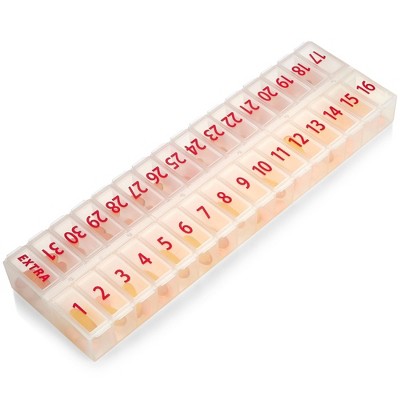
MEDca Monthly Pill Organizer

This is one of the easiest ways to organize medications for an entire month.

MEDca Large Monthly Pill Organizer (1‑31 Compartments)

MEDca Large Monthly Pill Organizer (1‑31 Compartments)

$9.45

Why People Like It

The monthly organizer is perfect for people who take medications every day and want to reduce weekly refilling.

Key features include:

  • 31 numbered compartments
  • Durable BPA-free plastic
  • Clear containers so you can see pills easily
  • Large compartments for vitamins and supplements

Monthly organizers allow you to plan medications up to 30 days in advance, saving time and reducing the chance of missing doses.

This is the option most people prefer because it minimizes how often they need to organize everything.


Best Weekly AM/PM Pill Organizer

If you take medications 2-4 times a day, a weekly AM/PM organizer may be a better option.

ACDANC Weekly Pill Organizer 7 Day 2 Times a Day

CoaGu Weekly Pill Organizer 7 Day 2-4 Times a Day

$6.99

Key Features

  • Morning and evening compartments
  • 7-day organization
  • Compact and travel friendly
  • Moisture-resistant design

Weekly pill organizers are ideal for people who want to review their medication schedule each week instead of once per month.

They’re also a great choice if you frequently change medications or dosages.

My Go-To Weekly Pill Organizer

One product that has recently helped me stay consistent with my medication routine is the Basic Care 7‑Day Weekly Pill Organizer, Portable Medicine and Vitamin Planner Box .

This simple weekly pill organizer makes it easy to plan medications and vitamins ahead of time. Instead of opening multiple bottles every day, I can organize everything once a week and know exactly what I need to take each day.

Grab the Amazon Basic Care 7-Day Weekly Pill Organizer here.

The Basic Beginner Weekly Pill Organizer

Monthly vs Weekly Pill Organizers

Choosing between a monthly and weekly pill box depends on your routine.

FeatureWeekly OrganizerMonthly Organizer
Refill frequencyEvery weekOnce per month
Best forChanging medicationsStable routines
PortabilityVery portableSlightly larger
Organization levelModerateMaximum
Ideal usersBeginnersLong-term medication users

Personally, I prefer the weekly option because I am a beginner and starting with a weekly one feels a little easier.


A Simple Medication Organization Routine

Once you get a pill organizer, creating a simple routine makes it even more effective.

Here’s the process to follow.

Step 1: Pick a Consistent Refill Day

Choose a day you’ll remember.

Many people pick:

  • Sunday evening
  • Monday morning
  • The first day of the month

Consistency is key.

Step 2: Gather All Medication Bottles

Before filling the organizer, gather everything in one place:

  • Prescription medications
  • Vitamins
  • Supplements

This prevents mistakes and makes the process faster.


Step 3: Fill Each Compartment

Carefully place pills into the correct compartment.

If your organizer includes AM/PM sections, separate morning and evening medications.

Double-check everything before closing the lids.


Step 4: Store the Organizer Somewhere Visible

One of the best habits you can create is placing your organizer somewhere you’ll see it every day.

Common spots include:

  • Nightstand
  • Bathroom counter
  • Kitchen counter
  • Next to your coffee maker

Visibility helps reinforce the routine.

Tips for Choosing the Best Pill Organizer

Not all pill boxes are the same. Here are a few things to consider before buying one.


Compartment Size

If you take large vitamins or fish oil capsules, make sure the compartments are big enough.

Some organizers are designed for small tablets only.


Number of Doses Per Day

Choose an organizer that matches your medication schedule:

  • Once per day
  • Twice per day (AM/PM)
  • Three or four times per day

Ease of Opening

If you have arthritis or limited hand strength, look for:

  • Push-button organizers
  • Snap lids with large tabs

These designs make daily use much easier.

Portability

If you travel frequently, look for:

  • Removable daily containers
  • Compact designs
  • Durable lids

Some organizers allow you to remove a single day and take it with you.


Safety Tips for Using a Pill Organizer

While pill organizers are extremely helpful, it’s important to use them safely.

Here are a few simple precautions:

Always double-check medications when filling the organizer.

Mixing up pills can lead to incorrect dosing.

Keep medications away from children and pets.

Many organizers are not childproof.

Store medications properly.

Some medications must stay in their original bottles because they’re sensitive to moisture or light.

When in doubt, ask your pharmacist.

Who Should Use a Pill Organizer?

Pill organizers are helpful for many different people.

They’re especially useful for:

  • People taking multiple medications
  • Anyone managing chronic conditions
  • Caregivers organizing medication for family members
  • People who take daily vitamins
  • Anyone who struggles to remember doses

Even if you only take two or three pills a day, a pill organizer can simplify your routine.


Final Thoughts

Getting my medications organized has made daily life significantly easier.

Instead of juggling multiple bottles and second-guessing myself, I can simply open the compartment for the day and know everything is already prepared.

A pill organizer might seem like a small change, but it can:

  • Improve consistency
  • Reduce stress
  • Save time
  • Help you stay on track with medications

If you take medications regularly, it’s one of the simplest tools you can add to your routine.

I’m Not Even 50 Yet..Why Do We Have This Many Meds?

Disclosure: As an Amazon Associate, I earn from qualifying purchases. This comes at no extra cost to you, and it helps support this blog. Thanks for your support!

If you enjoyed reading How I Finally Got My Medications Organized (And the Pill Organizer That Made It Easy) subscribe to our e-mail list at Sheri’s Dream Catcher to stay updated with new blog posts

Opinion Disclaimer-This is a personal blog. Any views or opinions represented in this blog are personal and belong solely to the owner and do not represent those of people, institutions or organizations that the owner may or may not be associated with in professional or personal capacity, unless explicitly stated. Any views or opinions are not intended to malign any religion, ethnic group, club, organization, company or individual

Does Potassium Help Lower Blood Pressure? | Natural Ways to Support Heart Health

Learn how potassium can help lower high blood pressure naturally. Find out which foods are rich in potassium and whether supplements are safe

High blood pressure, or hypertension, is often called the “silent killer” for a reason—it typically has no symptoms but can lead to serious health issues like heart attacks, strokes, and kidney disease. The good news? Many lifestyle changes can help manage or lower your blood pressure. One of the most natural—and often overlooked—ways to support healthy blood pressure is by getting enough potassium in your diet.

What is Potassium and Why Is It Important?

Potassium is a mineral and electrolyte that plays a vital role in your body’s functions. It helps regulate:

  • Fluid balance
  • Nerve signals
  • Muscle contractions, including your heartbeat

But most importantly for people concerned about blood pressure, potassium helps counteract the effects of sodium—a major contributor to elevated blood pressure.

An adult male receiving hospital treatment for elevated blood pressure levels
Silent but dangerous—please monitor your BP before it becomes an emergency (Actual picture from High Blood Pressure Collapse in April 2024)

How Potassium Affects Blood Pressure

High sodium levels can cause the body to retain water, increasing blood volume and, in turn, raising blood pressure. Potassium helps your body excrete excess sodium through urine and eases tension in your blood vessel walls. This double benefit makes potassium a key nutrient in managing hypertension.

Research-Backed Benefits

Numerous studies have shown that increasing potassium intake can have a meaningful effect on lowering blood pressure, especially in people with high sodium intake or those already diagnosed with hypertension. According to the American Heart Association, potassium-rich diets can lower systolic blood pressure (the top number) by several points in both hypertensive and normotensive individuals.

Romance in the ER: because nothing says love like IV fluids and fluorescent lights. ❤️💉

How Much Potassium Do You Need?

The recommended daily intake for potassium is around 3,500 to 4,700 mg for adults. However, most people don’t get nearly enough from their diet. Fortunately, many whole foods are naturally rich in potassium.

Potassium-Rich Foods to Include in Your Diet

  • Bananas
  • Sweet potatoes
  • Spinach
  • Avocados
  • Beans and lentils
  • Tomatoes
  • Oranges and orange juice
  • Yogurt
  • Salmon and tuna

Focusing on a diet rich in fruits, vegetables, legumes, and lean proteins—like the DASH (Dietary Approaches to Stop Hypertension) diet—can help you meet your potassium needs while also supporting overall cardiovascular health.

Should You Take Potassium Supplements?

While food sources are the best way to get potassium, supplements are available. However, potassium supplements should be taken only under medical supervision, especially if you have kidney problems or take medications like ACE inhibitors or diuretics, which can alter potassium levels.

Maintaining proper potassium levels is important for heart, nerve, and muscle health. If you’re not getting enough through your diet, supplements can help support your overall wellness. One reliable option is Nature Made Potassium Gluconate 550 mg.Heart Health Support – Helps support normal heart function and healthy nerve transmission.

👉 Check current price & reviews on Amazon:
Nature Made Potassium Gluconate 550 mg – 100 Tablets

Disclosure: As an Amazon Associate, I earn from qualifying purchases. This is at no extra cost to you.

Final Thoughts

Yes, potassium can help bring down your blood pressure—especially when it’s part of an overall heart-healthy lifestyle that includes reduced sodium intake, regular exercise, and stress management. It’s not a magic bullet, but it’s a powerful tool in your blood pressure management toolkit.

Talk to your healthcare provider before making significant dietary changes or starting supplements, especially if you have chronic health conditions.

A cardiologist date: where love and heartbeats are closely monitored. 💓🥼

Take Control of Your Heart Health with This Easy-to-Use BP Monitor

If you monitor your blood pressure at home, having a reliable and easy-to-use device is essential. I recently came across the Runstar Upper Arm Blood Pressure Monitor, and it’s a great option for anyone looking for accuracy and convenience. Wide Range Cuff: Fits arm sizes from 8.7” to 16.5”, making it suitable for most users.

FSA/HSA Eligible: You can use your Flexible Spending Account or Health Savings Account to purchase it.

Easy to Use: Fully automatic with one-button operation—great for seniors or those unfamiliar with tech.

Dual-User Memory: Stores up to 2×99 readings, so two people can track their blood pressure history.

Portable: Comes with a storage bag, perfect for home use or travel. We’ve found the readings to be consistent and accurate, and I really appreciate how intuitive the display is. It’s also compact enough to keep in a drawer or take with you on trips.👉 You can check it out here on Amazon:
Runstar Upper Arm Blood Pressure Monitor on Amazon

🩺 One-touch operation
💾 Dual-user memory (2×99 readings)
🎒 Comes with a storage bag
✅ Great for home use

Disclosure: I may earn a small commission if you purchase through this link, at no extra cost to you.

Looking for more health tips? Subscribe to our blog for updates on nutrition, wellness, and living a heart-healthy lifestyle.

Opinion Disclaimer-This is a personal blog. Any views or opinions represented in this blog are personal and belong solely to the owner and do not represent those of people, institutions or organizations that the owner may or may not be associated with in professional or personal capacity, unless explicitly stated. Any views or opinions are not intended to malign any religion, ethnic group, club, organization, company or individual