When most people think about heart health, they think about blood pressure, cholesterol, or heart attacks. However, another serious condition that deserves attention is an aortic aneurysm.
What Is an Aortic Aneurysm?
The aorta is the largest artery in the body. It carries oxygen-rich blood from the heart to the rest of the body. An aortic aneurysm occurs when a section of the aorta becomes weakened and begins to bulge outward, much like a balloon.
Over time, the aneurysm can grow larger. If it becomes too large, it may rupture or tear, creating a life-threatening medical emergency.
Thoracic Aortic Aneurysm (TAA) Occurs in the chest portion of the aorta.
Abdominal Aortic Aneurysm (AAA) Occurs in the abdominal section of the aorta and is more common than thoracic aneurysms.
Risk Factors
Several factors can increase the risk of developing an aortic aneurysm:
High blood pressure
Smoking
High cholesterol
Family history of aneurysms
Aging
Certain genetic conditions
Hardening of the arteries (atherosclerosis)
Symptoms
Many aneurysms develop slowly and may not cause symptoms at first. When symptoms do occur, they may include:
Chest pain
Back pain
Shortness of breath
Hoarseness
Difficulty swallowing
A pulsing sensation in the abdomen
Because symptoms are often absent, some aneurysms are discovered during routine imaging tests.
How Are They Diagnosed?
Doctors may use:
Ultrasound
CT scans
MRI scans
Echocardiograms
These tests help determine the size and location of the aneurysm.
Treatment Options
Treatment depends on the size, location, and growth rate of the aneurysm.
Small aneurysms may be monitored regularly with imaging tests. Lifestyle changes such as quitting smoking, controlling blood pressure, and maintaining a heart-healthy diet are often recommended.
Larger aneurysms or those growing rapidly may require surgical repair to prevent rupture.
Why Awareness Matters
Aortic aneurysms are often called a “silent” condition because many people have no symptoms until a serious complication occurs. Early detection can save lives.
If you have a family history of aneurysms, smoke, or have high blood pressure, talk with your healthcare provider about your risk factors and whether screening is appropriate for you.
Final Thoughts
Knowledge is power when it comes to heart health. Understanding the warning signs, risk factors, and importance of early detection can help protect you and your loved ones. Regular checkups and healthy lifestyle choices remain some of the best tools for reducing your risk.
This article is for educational purposes only and should not be considered medical advice. Always consult a qualified healthcare professional regarding any health concerns.
If you enjoyed reading Understanding Aortic Aneurysms: What You Need to Know subscribe to our e-mail list at Sheri’s Dream Catcher to stay updated with new blog posts
Opinion Disclaimer-This is a personal blog. Any views or opinions represented in this blog are personal and belong solely to the owner and do not represent those of people, institutions or organizations that the owner may or may not be associated with in professional or personal capacity, unless explicitly stated. Any views or opinions are not intended to malign any religion, ethnic group, club, organization, company or individual
Learn what ALP (Alkaline Phosphatase) is, what high or low levels mean, and when to be concerned about your blood test results. Simple, clear health explanation.
Understanding ALP (Alkaline Phosphatase)
If you’ve had routine blood work done, you may notice a result called ALP (Alkaline Phosphatase). Many people are unsure what this number means or whether they should be concerned if it is high or low.
This guide breaks it down in simple terms so you can better understand your lab results and what questions to ask your healthcare provider.
ALP (Alkaline Phosphatase) is an enzyme found in several parts of the body, including:
Liver
Bones
Kidneys
Digestive system
Enzymes are proteins that help the body carry out important chemical reactions. Because ALP is found in multiple organs, changes in its levels can sometimes provide clues about your overall health.
Why Is ALP Tested?
Doctors often include ALP in a standard blood panel to help evaluate:
Liver health and function
Bone growth or bone activity
Bile duct function
Overall metabolic health
ALP is usually interpreted alongside other lab values for a complete picture of your health.
What Does High ALP Mean?
A higher-than-normal ALP level may be associated with:
Liver inflammation or liver conditions
Blockage in bile ducts
Bone growth or healing
Bone disorders
Certain medications
It’s important to understand that high ALP does not automatically mean a serious illness. Doctors always consider symptoms, medical history, and other lab results.
What Does Low ALP Mean?
Low ALP levels are less common, but may be linked to:
When learning more about health topics like ALP (Alkaline Phosphatase) and reviewing lab results, many people also start paying closer attention to their everyday wellness routines.
While no single product can diagnose, treat, or change medical conditions, building simple daily habits can be part of a balanced lifestyle approach to overall well-being.
One product I personally came across and started incorporating into my routine is Daily Dose. It’s something I am going to use as part of my general wellness habits when focusing on staying consistent with self-care and nutrition awareness.
If you’re interested in exploring it, you can take a look here: 👉 Dose For Your Liver
As an Amazon Associate, I earn from qualifying purchases.
Understanding ALP can help you feel more confident when reviewing your blood test results. Instead of focusing on fear, focus on awareness and conversation with your healthcare provider.
Your health is a full picture — and ALP is just one small piece of it.
Disclosure: As an Amazon Associate, I earn from qualifying purchases. This comes at no extra cost to you, and it helps support this blog. Thanks for your support!
If you enjoyed reading Understanding ALP (Alkaline Phosphatase): What High or Low Levels Mean in Blood Testssubscribe to our e-mail list at Sheri’s Dream Catcher to stay updated with new blog posts
Opinion Disclaimer-This is a personal blog. Any views or opinions represented in this blog are personal and belong solely to the owner and do not represent those of people, institutions or organizations that the owner may or may not be associated with in professional or personal capacity, unless explicitly stated. Any views or opinions are not intended to malign any religion, ethnic group, club, organization, company or individual
Dear Dream Catcher — A Letter for May’s Two Full Moons
There’s something quietly powerful about this May. It brings not one, but two full moons—each carrying its own message, its own rhythm, and its own invitation for how we move through this season.
The first arrives on May 1st at 1:23pm ET—the Flower Moon in Scorpio, a micromoon. This moon draws us inward. Scorpio energy is about truth, depth, and transformation. It asks us to look beneath the surface of our lives, to be honest about what’s really there, and to release what no longer fits.
This time of year reflects that energy beautifully. Gardens are just beginning, and while we may not see much above the soil yet, so much is happening underneath—roots forming, strength building, life quietly preparing to emerge. This moon reminds us that unseen work matters.
The inner shifts. The quiet decisions. The things we finally face.
Then, on May 31st at 4:45am ET, the second full moon rises—the Blue Moon in Sagittarius, also a micromoon. Where Scorpio turns us inward, Sagittarius lifts our gaze outward. This moon is about expansion, curiosity, and possibility. It encourages us to explore, to learn, and to take steps toward what’s calling us forward.
Together, these moons create a rhythm: first, we release—then, we expand.
One clears the space. The other asks us to fill it.
The Space Between: Where Change Begins
There’s a quiet wisdom in the space between these two moons.
Growth isn’t just about adding more—it’s about letting go first.
The Flower Moon gives us permission to loosen our grip on old patterns, lingering worries, and anything that feels heavy. It creates room.
Then the Blue Moon arrives like fresh air, inviting us to step forward with intention. Not all at once. Not perfectly. Just honestly.
Even the smallest shift can begin something new.
Tending to What Matters (Real Life, Real Grounding)
This energy isn’t just symbolic—it shows up in very real ways.
The first half of May is a time to take care of what’s foundational:
organizing important documents
handling things you’ve been putting off
creating space in your home and your mind
It’s also a meaningful time to plant—gardens, ideas, and intentions. Trusting that growth begins long before we see results.
It’s a time for expression too. Stories, memories, thoughts that have been sitting quietly—they’re ready to come forward.
And sometimes, having the right tool makes that easier.
If part of your May is about speaking, recording, connecting, or sharing more of your voice, something as simple as a good headset can make a real difference.
The Logitech H390 USB Headset is a simple, reliable option that just works. It plugs right in, has a noise-canceling mic, and keeps your voice clear whether you’re recording stories, joining calls, or taking a class.
It’s not fancy—and that’s the point. It supports the moment without getting in the way.
👉 You can get yours on Amazon here: Logitech H390 USB Headset $19.99•Comfortable, noise-canceling USB headset for calls and meetings.
There’s something meaningful about that. The Flower Moon asks us to bring what’s inside… out. And sometimes, being heard starts with making it easy to speak.
Stepping Forward
As the Blue Moon approaches, the energy begins to shift.
We lift our eyes. We think bigger. We take a step forward.
This is where ideas begin to open up. Where plans start to feel possible again. Where we allow curiosity to lead instead of hesitation.
It’s not about having everything figured out—it’s about movement.
One step is enough.
Support Is Part of the Story
What makes May feel especially grounding is the reminder that we’re not doing any of this alone.
Support shows up in many forms:
helping hands
shared ideas
encouragement
simply being present
In both the quiet, inward moments and the bold, outward ones—there is strength in connection.
Disclosure: As an Amazon Associate, I earn from qualifying purchases. This comes at no extra cost to you, and it helps support this blog. Thanks for your support!
If you enjoyed reading The May Moons Speak: Transformation & Expansion subscribe to our e-mail list at Sheri’s Dream Catcher to stay updated with new blog posts
Opinion Disclaimer-This is a personal blog. Any views or opinions represented in this blog are personal and belong solely to the owner and do not represent those of people, institutions or organizations that the owner may or may not be associated with in professional or personal capacity, unless explicitly stated. Any views or opinions are not intended to malign any religion, ethnic group, club, organization, company or individual
April is the perfect time for a mindset reset. As the seasons begin to shift, it naturally invites you to slow down, reflect, and realign your energy. A simple Sunday ritual—like a Sip & Think moment—can help you reconnect with yourself and move forward with more intention.
This isn’t about overthinking your life or trying to fix everything at once. It’s about creating a calm space to ask yourself meaningful questions—and being honest with the answers.
🌿 Create Your Calm Space
Before I fully settle into a Sip-N-Think moment, I like to reset the energy around me.
One of my favorite ways to do that is with a simple smudging ritual using white sage. There’s something deeply grounding about the aroma—it helps clear the space, slow your thoughts, and bring you back to center.
I recommend using a smudge set that includes white sage, palos santo, red dragons blood and a turkey feather, which makes the process feel more intentional and complete.
To set the tone for this moment, I kept it simple and calming.
I was enjoying a cup of Stash Wild Raspberry Hibiscus Herbal Tea—a naturally caffeine-free blend with a light, fruity flavor that feels both refreshing and grounding.
Growth doesn’t always feel exciting—it can feel uncomfortable, unclear, or even a little emotional. You might be outgrowing habits, routines, environments, or even goals that once made sense.
The real clarity comes from understanding why it no longer fits who you are becoming.
2. ☕ Am I actually moving forward, or just staying busy?
Being busy can feel productive—but not all movement leads to progress.
Take a moment to reflect on your past few weeks. Are your actions aligned with something meaningful, or are they just filling time?
3. 🌱 What version of me am I becoming?
You don’t need a complete reinvention—just awareness.
Your daily habits are shaping you in real time. Are you becoming more intentional? More distracted? More disciplined?
This question can be uncomfortable—but it’s often the most important.
Avoidance tends to hide behind distractions. The things you keep putting off are usually the exact areas that deserve your attention.
5. 🌸 What’s been giving me real energy lately?
Not quick dopamine hits—but real energy.
What leaves you feeling clear, calm, or more like yourself afterward? That’s what you want to lean into more often.
If I’m being honest, one thing that’s been giving me more consistent, real energy lately is being intentional about what I put into my body—especially in the mornings.
I’ve been reaching for Daily Dose as a gentle alternative to traditional coffee. It gives a more balanced, focused kind of energy without the crash or jittery feeling.
It’s become part of my routine when I want to feel clear, grounded, and actually present—not just stimulated.
6. 🌞 If I reset April from today, what would I do differently?
No guilt. No pressure.
This is a soft reset—not a restart from scratch. Just a chance to realign and move forward with more intention.
✍️ Write It Down
Don’t just think through these questions—write your answers down.
Seeing your thoughts on paper brings clarity. Patterns start to show. And growth becomes something you can actually track.
💫 Final Thought
This isn’t about perfection—it’s about intention.
Take this time for yourself. Slow down. Sip your tea. Reflect honestly.
Your growth doesn’t need to be perfect… just intentional.
Disclosure: As an Amazon Associate, I earn from qualifying purchases. This comes at no extra cost to you, and it helps support this blog. Thanks for your support!
If you enjoyed reading Sunday Sip & Think: April Reset for Mindfulness, Clarity & Personal Growth subscribe to our e-mail list at Sheri’s Dream Catcher to stay updated with new blog posts
Opinion Disclaimer-This is a personal blog. Any views or opinions represented in this blog are personal and belong solely to the owner and do not represent those of people, institutions or organizations that the owner may or may not be associated with in professional or personal capacity, unless explicitly stated. Any views or opinions are not intended to malign any religion, ethnic group, club, organization, company or individual
If you’ve ever stood in the supplement aisle staring at rows of vitamins, you’ve probably wondered: When am I actually supposed to start taking these? Is it something you should’ve been doing all along—or only when you get older?
The truth is, there isn’t a one-size-fits-all answer. The “right” time to start taking vitamins depends more on your lifestyle, diet, and overall health than your age alone. But as we move through different stages of life, our bodies do change—and so do our nutritional needs.
Early Years: Building the Foundation
In childhood and early adulthood, most people can get everything they need from a balanced diet. If you’re eating a variety of fruits, vegetables, proteins, and whole grains, supplements usually aren’t necessary.
Of course, there are exceptions—people with dietary restrictions, certain health conditions, or nutrient deficiencies may need extra support. But overall, this stage of life is less about supplements and more about developing healthy eating habits that last.
As life gets busier, nutrition can sometimes take a back seat. This is when some people begin to think more proactively about their health.
You might see people adding things like vitamin D, B-complex vitamins, or omega-3s into their routine—not because something is wrong, but because they want to stay ahead of potential issues. It’s less about fixing problems and more about prevention.
50 and Beyond: Listening to Your Body
As we get older, our bodies don’t absorb nutrients as efficiently as they once did. Energy levels can shift, bone health becomes more important, and the immune system may need extra support.
This is the stage I’m personally stepping into.
I’ll be turning 50 this year, and for the first time, I’ve started to take my vitamin routine more seriously. Recently, I added vitamin B12, an immune support supplement, and a few natural blends like sea moss, black seed oil, ashwagandha, and ginger.
But if I’m being honest, this shift didn’t happen out of nowhere.
Recently, I’ve been dealing with a few medical concerns. Nothing life-defining—thankfully, they’re manageable and treatable—but they all seemed to show up at once. It felt like my body was waving a flag, asking me to slow down, pay attention, and take better care of myself while it tries to heal.
That was my wake-up call.
For me, it’s not about chasing trends—it’s about being more intentional. Paying attention to how I feel. Supporting my body instead of ignoring it.
Vitamin B12, for example, is important for energy and nerve health, and it’s one that many people over 50 can become deficient in. The immune support supplements are something I use to help stay ahead, especially during times when I feel run down.
The natural additions—like sea moss and black seed oil—are things I’ve explored out of curiosity and interest in more holistic approaches. While there’s growing popularity around them, I also understand that not everything “natural” is automatically necessary or backed by strong science.
One thing I’ve learned is that more isn’t always better.
Vitamins are meant to supplement your diet, not replace it. It’s still important to focus on real, whole foods first. And just because something is available over the counter doesn’t mean it’s right for everyone.
Some supplements can interact with medications or even cause unwanted side effects if taken in excess. That’s why it’s always a good idea to check in with a healthcare provider before starting anything new—especially as we get older.
So, When Should You Start?
The best time to start taking vitamins isn’t tied to a specific age—it’s tied to awareness.
It’s about knowing your body, understanding your diet, and recognizing when you might need extra support.
For some, that might be in their 30s. For others, like me, it might not happen until 50. And that’s okay.
What matters most is that you start paying attention.
Because sometimes, those quiet signals from your body turn into louder ones—and if you listen closely enough, they can guide you toward taking better care of yourself, one step at a time.
Disclosure: As an Amazon Associate, I earn from qualifying purchases. This comes at no extra cost to you, and it helps support this blog. Thanks for your support!
If you enjoyed reading At What Age Should You Start Taking Vitamins? subscribe to our e-mail list at Sheri’s Dream Catcher to stay updated with new blog posts
Opinion Disclaimer-This is a personal blog. Any views or opinions represented in this blog are personal and belong solely to the owner and do not represent those of people, institutions or organizations that the owner may or may not be associated with in professional or personal capacity, unless explicitly stated. Any views or opinions are not intended to malign any religion, ethnic group, club, organization, company or individual
Q1 2026 is officially in the books… and wow, what a journey.
Over the last three months, there’s been growth, challenges, lessons, and a lot happening behind the scenes. In my latest My Business Journey Journal: Q1 Recap video, I break it all down — the real story, no fluff.
This isn’t just about wins. It’s about what actually happens when you’re building something from the ground up.
💡 What I Cover in the Video
What worked (and what didn’t)
The biggest lessons I learned in Q1
Mistakes I won’t be repeating
My game plan heading into Q2
If you’re building something of your own, stay locked in — Q2 is where we level up.
As part of this next phase, I’m leaning deeper into the Sip-N-Think lifestyle — creating moments that feel intentional, reflective, and inspiring. It’s about self-connection—using affirmation cards and everyday life experiences to guide our growth, mindset, and personal journey
One of my favorite tools right now is a Turkey Feather Quill Pen & Ink Set — it’s been a game-changer for how I journal, plan, and create.
✨ There’s something powerful about slowing down and actually writing your thoughts — not typing, not rushing — just being present in the moment.
I’m currently working on fully connecting Complicated Beauty Shop products on our Complicated Beauty with Sheri website to create a more seamless experience across all platforms.
In the meantime, the updated products are live and ready for you to explore in the shop — perfect for your next sip-and-think moment ☕💭
💖 Thank You
Thank you for your patience, your support, and for being part of this journey with me.
We’re building something meaningful — step by step.
👉Dating Sheri-we are brainstorming ideas #DatingSheri and #DoubleDatingSheri. Products have not been created as of yet. Coming Soon though. Let’s see if we can come up a product by the end of Q3!
Disclosure: As an Amazon Associate, I earn from qualifying purchases. This comes at no extra cost to you, and it helps support this blog. Thanks for your support!
If you enjoyed reading Q1 Is DONE — And It Was a Ride subscribe to our e-mail list at Sheri’s Dream Catcher to stay updated with new blog posts
Opinion Disclaimer-This is a personal blog. Any views or opinions represented in this blog are personal and belong solely to the owner and do not represent those of people, institutions or organizations that the owner may or may not be associated with in professional or personal capacity, unless explicitly stated. Any views or opinions are not intended to malign any religion, ethnic group, club, organization, company or individual
The thyroid gland is a small, butterfly-shaped gland located at the front of your neck just below your Adam’s apple. Even though it’s small, it plays a major role in how your body functions every day.
Its primary job is to produce hormones that regulate metabolism—the process that controls how your body converts food into energy.
When your thyroid is working properly, your body maintains balanced energy, temperature, weight, and mood. When it isn’t, many systems in the body can be affected.
The name was introduced in 1656 by the English anatomist Thomas Wharton, who described the gland based on its shape long before scientists understood its function.
Today the thyroid is often described as butterfly-shaped, with two lobes connected by a small bridge called the isthmus.
The Bottom Line
Even though it’s small, the thyroid has a powerful influence on metabolism, energy, weight, and hormone balance.
Supporting thyroid health can be as simple as:
✔ Eating a balanced diet ✔ Getting enough iodine, selenium, and zinc ✔ Adding foods like Brazil nuts and cashews ✔ Exercising regularly ✔ Managing stress ✔ Getting medical testing when symptoms appear
Healthy habits and proper nutrition can go a long way in keeping this little gland working its best.
🥜 Best Nuts for Thyroid Health (Recommended Picks)
If you’re trying to support your thyroid naturally, a few specific nuts can make a big difference.
Two minerals are especially important:
Selenium → helps activate thyroid hormones
Zinc → supports hormone production and immune health
The easiest way to get them? A small daily serving of nuts.
Mixed nuts provide a variety of nutrients, including:
Healthy fats
Protein
Magnesium
Zinc
Selenium (if Brazil nuts are included)
They’re perfect for a daily nutrient-dense snack.
🥗 Simple Thyroid-Support Snack
A quick daily combination many nutritionists recommend:
1–2 Brazil nuts → selenium
Small handful of cashews → zinc
Mixed nuts → healthy fats & minerals
This takes less than 30 seconds and provides nutrients that support thyroid hormone function.
Disclosure: As an Amazon Associate, I earn from qualifying purchases. This comes at no extra cost to you, and it helps support this blog. Thanks for your support!
If you enjoyed reading Understanding Your Thyroid: The Small Gland That Controls Your Energy, Weight, and Metabolism subscribe to our e-mail list at Sheri’s Dream Catcher to stay updated with new blog posts
Opinion Disclaimer-This is a personal blog. Any views or opinions represented in this blog are personal and belong solely to the owner and do not represent those of people, institutions or organizations that the owner may or may not be associated with in professional or personal capacity, unless explicitly stated. Any views or opinions are not intended to malign any religion, ethnic group, club, organization, company or individual
If you take more than one medication or supplement every day, you probably know how easy it is to get overwhelmed by pill bottles.
Between prescription medications, vitamins, and supplements, it’s easy to forget whether you already took something—or worse, miss a dose entirely.
For years, I kept everything in separate bottles in my kitchen cabinet. Every morning looked the same: open bottle, check label, take pill, repeat. It was time-consuming and honestly a little annoying.
Eventually I realized I needed a better system.
That’s when I discovered pill organizers.
Using a pill organizer has made managing my medications dramatically easier. In this post I’ll share:
Why pill organizers help with medication routines
The best pill organizers on Amazon
How I organize my medications each week or month
Tips for choosing the right pill box for your needs
If you’re struggling to keep track of medications or supplements, this simple tool can make a huge difference.
Why Medication Organization Matters
Medication adherence is a bigger issue than many people realize. Missing doses or accidentally taking extra medication can affect treatment results and overall health.
Even if you’re only taking a few daily vitamins, organization still matters.
Common problems people experience include:
Forgetting to take medication
Accidentally double dosing
Losing track of supplements
Running out of prescriptions unexpectedly
Struggling to travel with multiple pill bottles
A pill organizer helps solve many of these issues because it allows you to pre-sort your medications in advance.
Instead of opening multiple bottles every day, you can fill your pill organizer once a week—or even once a month.
Who needs snacks when you’ve got a full bag of prescriptions?”
Benefits of Using a Pill Organizer
Once I switched to a pill organizer, I noticed several benefits almost immediately.
1. It Prevents Missed Doses
When your pills are organized by day, it’s easy to see if you already took them.
No more wondering:
“Did I take that already?”
An empty compartment gives you instant confirmation.
2. It Saves Time
Instead of opening several bottles every day, you fill your organizer once a week or month.
My weekly refill takes about 5–10 minutes, and then I’m done thinking about it.
3. It Makes Travel Easier
Traveling with medication bottles can be bulky.
A pill organizer lets you bring only the pills you need for your trip.
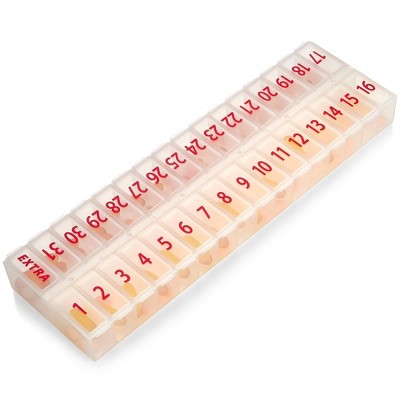
Many organizers even include removable daily containers, making them extremely convenient.
4. It Helps You Track Refills
One unexpected benefit is that it helps you notice when prescriptions are running low.
When you fill your organizer and realize you don’t have enough pills for next week, it’s a clear signal to refill your prescription.
Best Pill Organizers on Amazon
If you’re looking for a pill organizer, Amazon has dozens of options. The best one for you depends on how many medications you take and how often you want to refill it.
Weekly pill organizers are ideal for people who want to review their medication schedule each week instead of once per month.
They’re also a great choice if you frequently change medications or dosages.
My Go-To Weekly Pill Organizer
One product that has recently helped me stay consistent with my medication routine is the Basic Care 7‑Day Weekly Pill Organizer, Portable Medicine and Vitamin Planner Box .
This simple weekly pill organizer makes it easy to plan medications and vitamins ahead of time. Instead of opening multiple bottles every day, I can organize everything once a week and know exactly what I need to take each day.
Grab the Amazon Basic Care 7-Day Weekly Pill Organizer here.
The Basic Beginner Weekly Pill Organizer
Monthly vs Weekly Pill Organizers
Choosing between a monthly and weekly pill box depends on your routine.
Feature
Weekly Organizer
Monthly Organizer
Refill frequency
Every week
Once per month
Best for
Changing medications
Stable routines
Portability
Very portable
Slightly larger
Organization level
Moderate
Maximum
Ideal users
Beginners
Long-term medication users
Personally, I prefer the weekly option because I am a beginner and starting with a weekly one feels a little easier.
A Simple Medication Organization Routine
Once you get a pill organizer, creating a simple routine makes it even more effective.
Here’s the process to follow.
Step 1: Pick a Consistent Refill Day
Choose a day you’ll remember.
Many people pick:
Sunday evening
Monday morning
The first day of the month
Consistency is key.
Step 2: Gather All Medication Bottles
Before filling the organizer, gather everything in one place:
Prescription medications
Vitamins
Supplements
This prevents mistakes and makes the process faster.
Step 3: Fill Each Compartment
Carefully place pills into the correct compartment.
If your organizer includes AM/PM sections, separate morning and evening medications.
Double-check everything before closing the lids.
Step 4: Store the Organizer Somewhere Visible
One of the best habits you can create is placing your organizer somewhere you’ll see it every day.
Common spots include:
Nightstand
Bathroom counter
Kitchen counter
Next to your coffee maker
Visibility helps reinforce the routine.
Tips for Choosing the Best Pill Organizer
Not all pill boxes are the same. Here are a few things to consider before buying one.
Compartment Size
If you take large vitamins or fish oil capsules, make sure the compartments are big enough.
Some organizers are designed for small tablets only.
Number of Doses Per Day
Choose an organizer that matches your medication schedule:
Once per day
Twice per day (AM/PM)
Three or four times per day
Ease of Opening
If you have arthritis or limited hand strength, look for:
Push-button organizers
Snap lids with large tabs
These designs make daily use much easier.
Portability
If you travel frequently, look for:
Removable daily containers
Compact designs
Durable lids
Some organizers allow you to remove a single day and take it with you.
While pill organizers are extremely helpful, it’s important to use them safely.
Here are a few simple precautions:
Always double-check medications when filling the organizer.
Mixing up pills can lead to incorrect dosing.
Keep medications away from children and pets.
Many organizers are not childproof.
Store medications properly.
Some medications must stay in their original bottles because they’re sensitive to moisture or light.
When in doubt, ask your pharmacist.
Who Should Use a Pill Organizer?
Pill organizers are helpful for many different people.
They’re especially useful for:
People taking multiple medications
Anyone managing chronic conditions
Caregivers organizing medication for family members
People who take daily vitamins
Anyone who struggles to remember doses
Even if you only take two or three pills a day, a pill organizer can simplify your routine.
Final Thoughts
Getting my medications organized has made daily life significantly easier.
Instead of juggling multiple bottles and second-guessing myself, I can simply open the compartment for the day and know everything is already prepared.
A pill organizer might seem like a small change, but it can:
Improve consistency
Reduce stress
Save time
Help you stay on track with medications
If you take medications regularly, it’s one of the simplest tools you can add to your routine.
Disclosure: As an Amazon Associate, I earn from qualifying purchases. This comes at no extra cost to you, and it helps support this blog. Thanks for your support!
If you enjoyed reading How I Finally Got My Medications Organized (And the Pill Organizer That Made It Easy) subscribe to our e-mail list at Sheri’s Dream Catcher to stay updated with new blog posts
Opinion Disclaimer-This is a personal blog. Any views or opinions represented in this blog are personal and belong solely to the owner and do not represent those of people, institutions or organizations that the owner may or may not be associated with in professional or personal capacity, unless explicitly stated. Any views or opinions are not intended to malign any religion, ethnic group, club, organization, company or individual
March Full Moon 2026 | Worm Moon Meaning | Full Moon in Virgo | Total Lunar Eclipse & Blood Moon Energy
On March 3rd at 6:38 AM, the March Full Moon—traditionally known as the Worm Moon—rises in the grounded and healing sign of Virgo.
This Full Moon in Virgo carries powerful themes of awakening, renewal, emotional clarity, and spiritual reflection. Named for the first signs of spring, when the earth begins to thaw and life stirs beneath the soil, the Worm Moon symbolizes rebirth, transformation, and the quiet beginnings of a new season.
If you’ve been feeling the urge to reset, reorganize, release, or realign—this Virgo Full Moon energy supports you.
Worm Moon Meaning: Why Is It Called the Worm Moon?
The spiritual meaning of the Worm Moon is rooted in nature.
The March full moon earned its name because earthworms begin to reappear as the soil warms. While simple, this symbolism runs deep.
Worms represent:
Transformation and renewal
Turning endings into beginnings
Rebirth through decomposition
Humility and groundedness
The natural cycle of life and death
Even decay feeds life. Even what breaks down becomes nourishment for something new.
Spiritually, the Worm Moon reminds us that growth often happens beneath the surface before we ever see results. If something in your life feels slow or unseen, trust that roots are forming.
Full Moon in Virgo: Spiritual and Emotional Meaning
Astrologically, the Moon governs emotions, intuition, and our inner world. Virgo energy brings precision, healing, mindfulness, and sacred attention to detail.
During the March Full Moon in Virgo, themes may include:
Emotional clarity
Self-improvement and personal growth
Organization and decluttering
Healing rituals and self-care
Releasing perfectionism
Restoring balance
Virgo Moon energy is steady, thoughtful, and practical. This isn’t chaotic transformation—it’s intentional change.
You may feel called to:
Clean your physical space
Reorganize your routines
Journal and reflect
Release habits that no longer serve you
This Virgo Full Moon invites emotional purification and grounded spiritual growth.
The red glow symbolizes intensity—but also resilience.
This rare combination of a Virgo Full Moon and total lunar eclipse creates a powerful moment for:
🌱 Letting go of outdated patterns 🌙 Emotional healing and reflection 🕊 Releasing perfectionism 🔥 Transforming shadow into wisdom 🌾 Preparing for spring renewal ✨ Setting grounded, practical intentions
The Worm Moon teaches that nothing is wasted. The Blood Moon reminds us that nothing stays the same. Virgo energy guides us to move forward thoughtfully.
How to Work With This Full Moon Energy
To align with the March Full Moon in Virgo and lunar eclipse energy
consider:
Journaling about what you are ready to release
Cleaning or decluttering your space
Performing a simple release ritual
Practicing mindfulness or meditation
Setting practical, achievable intentions
Step outside if you can and witness the moonlight—or the eclipse itself. Feel its glow. Breathe in the moment.
You are standing beneath the same sky as millions of others, connected through cycles of change, release, and renewal.
Growth does not always announce itself. Sometimes it happens underground. Sometimes it happens in shadow. Sometimes it happens quietly inside you.
And when spring arrives, what rises will be stronger for having waited.
🌱 Spring Gardening Tip: Harness the Power of Worms! 🌱
As the Worm Moon rises this March, it’s the perfect time to prepare your garden for vibrant spring growth. Worms are nature’s little soil experts—they aerate the soil, enrich it with nutrients, and help your plants thrive.
One of the best ways to give your garden a boost is with Earth Science Earthworm Castings – 3 lb. This premium plant fertilizer works wonders for both indoor and outdoor plants, enhancing your soil and supporting healthy vegetable gardens. 🌿 Amazon link here
Invite the magic of the Worm Moon into your garden this spring and watch your plants flourish! 🌕✨
Disclosure: As an Amazon Associate, I earn from qualifying purchases. This comes at no extra cost to you, and it helps support this blog. Thanks for your support!
If you enjoyed reading A Note Beneath March’s Full Worm Moonsubscribe to our e-mail list at Sheri’s Dream Catcher to stay updated with new blog posts
Opinion Disclaimer-This is a personal blog. Any views or opinions represented in this blog are personal and belong solely to the owner and do not represent those of people, institutions or organizations that the owner may or may not be associated with in professional or personal capacity, unless explicitly stated. Any views or opinions are not intended to malign any religion, ethnic group, club, organization, company or individual
There’s something about February that feels… different.
It’s the shortest month of the year, but somehow it can feel the longest.
Right now, with frigid temperatures biting at your face and snow covering the ground in a thick, stubborn blanket, every day feels heavier. The cold seeps into everything—your hands, your breath, even your motivation. Walking outside feels like dragging your feet through resistance. The sky stays gray longer than you’d like. The mornings are dark. The evenings come too quickly.
It’s not dramatic. It’s just difficult.
February doesn’t arrive with fireworks like January. It doesn’t come with bold promises or fresh calendars waiting to be filled. Instead, it shows up quietly, almost sternly, asking you to keep going when the excitement has faded.
The Weight of Winter
By February, winter isn’t charming anymore.
The first snowfall in December feels magical. January still carries that “new year” energy. But February? February is when winter settles in. The snowbanks are no longer beautiful—they’re obstacles. The cold isn’t refreshing—it’s relentless.
You start moving slower. You crave sunlight. Even small tasks feel like they require more effort than they should.
And yet, something subtle is happening beneath the frozen ground.
Even in the thick of winter, the days are getting longer. Not dramatically—but noticeably. A few extra minutes of light. A slightly softer sunset. A random afternoon that feels almost hopeful.
February is a month of quiet shifts.
After January’s loud ambition—resolutions, goal-setting, the pressure to “start fresh”—February feels honest. It’s when you realize change isn’t instant. It’s when motivation dips and discipline quietly takes over.
It’s less about excitement and more about endurance.
A Different Kind of Warmth
Even in its coldest days, February carries warmth in other ways. Through connection on Valentine’s Day. Through reflection and recognition during Black History Month.
It reminds us that warmth isn’t always found in the weather. Sometimes it’s found in community. In resilience. In simply showing up when it would be easier to retreat.
But sometimes, warmth is literal.
That’s why so many people choose February to escape—to book a flight somewhere sunny, to trade snow boots for sandals, even if just for a few days. There’s something powerful about giving yourself permission to step into sunshine when winter feels endless.
If you’re planning a warm-weather getaway, a reliable carry-on makes all the difference. This one is a great option for winter travel — lightweight, expandable, with spinner wheels and a built-in TSA lock for stress-free airport navigation: https://amzn.to/4ryB7vP
(As an Amazon Associate, I may earn from qualifying purchases.)
Sometimes hope looks like booking the ticket. Sometimes it looks like packing the bag.
Beneath the snow, roots are still alive. Seeds are still waiting. The earth is not finished—it is preparing.
And maybe we are too.
The heaviness you feel right now isn’t a sign that you’re failing. It’s a sign that you’re pushing through a season that demands strength in subtle ways. You are building endurance. You are growing patience. You are learning to continue even when progress feels invisible.
Spring doesn’t arrive all at once. It begins underground.
So if lately it feels like you’re dragging your feet, maybe it’s not weakness. Maybe it’s winter asking you to rest—or to plan your next move.
Longer days are already coming. The light is already stretching. The thaw has already begun—even if you can’t see it yet.
February feels different because it asks something different of us.
Not fireworks. Not reinvention. Just quiet faith that warmth will return.
And it always does.
Disclosure: As an Amazon Associate, I earn from qualifying purchases. This comes at no extra cost to you, and it helps support this blog. Thanks for your support!
Floating into February like… 🌴🍹 #WinterEscape #StThomas
If you enjoyed readingWhy February Feels Different subscribe to our e-mail list at Sheri’s Dream Catcher to stay updated with new blog posts
Opinion Disclaimer-This is a personal blog. Any views or opinions represented in this blog are personal and belong solely to the owner and do not represent those of people, institutions or organizations that the owner may or may not be associated with in professional or personal capacity, unless explicitly stated. Any views or opinions are not intended to malign any religion, ethnic group, club, organization, company or individual